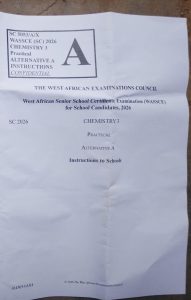
Cracking the Code: 2026 WAEC Alternative to Practical Specimens & Guide
If you are private candidate writing the WAEC GCE (Second Series) or a school candidate whose institution opts for the Alternative to Practical paper instead of the traditional wet lab sessions, you have a completely different hill to climb.
Unlike the standard practical where you physically handle animals, pour chemicals, or connect electrical wires, the Alternative to Practical paper tests your ability to visualize, interpret, and analyze. You will be presented with high-quality experimental diagrams, data tables, and descriptions of specimens, and you must use your theoretical knowledge to deduce the results.
⚠️ CRITICAL SPECIMEN WARNING:
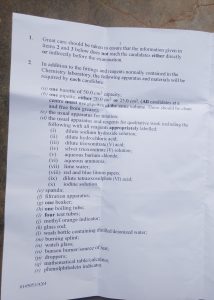
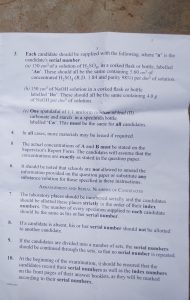
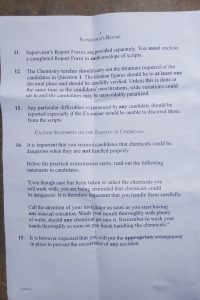
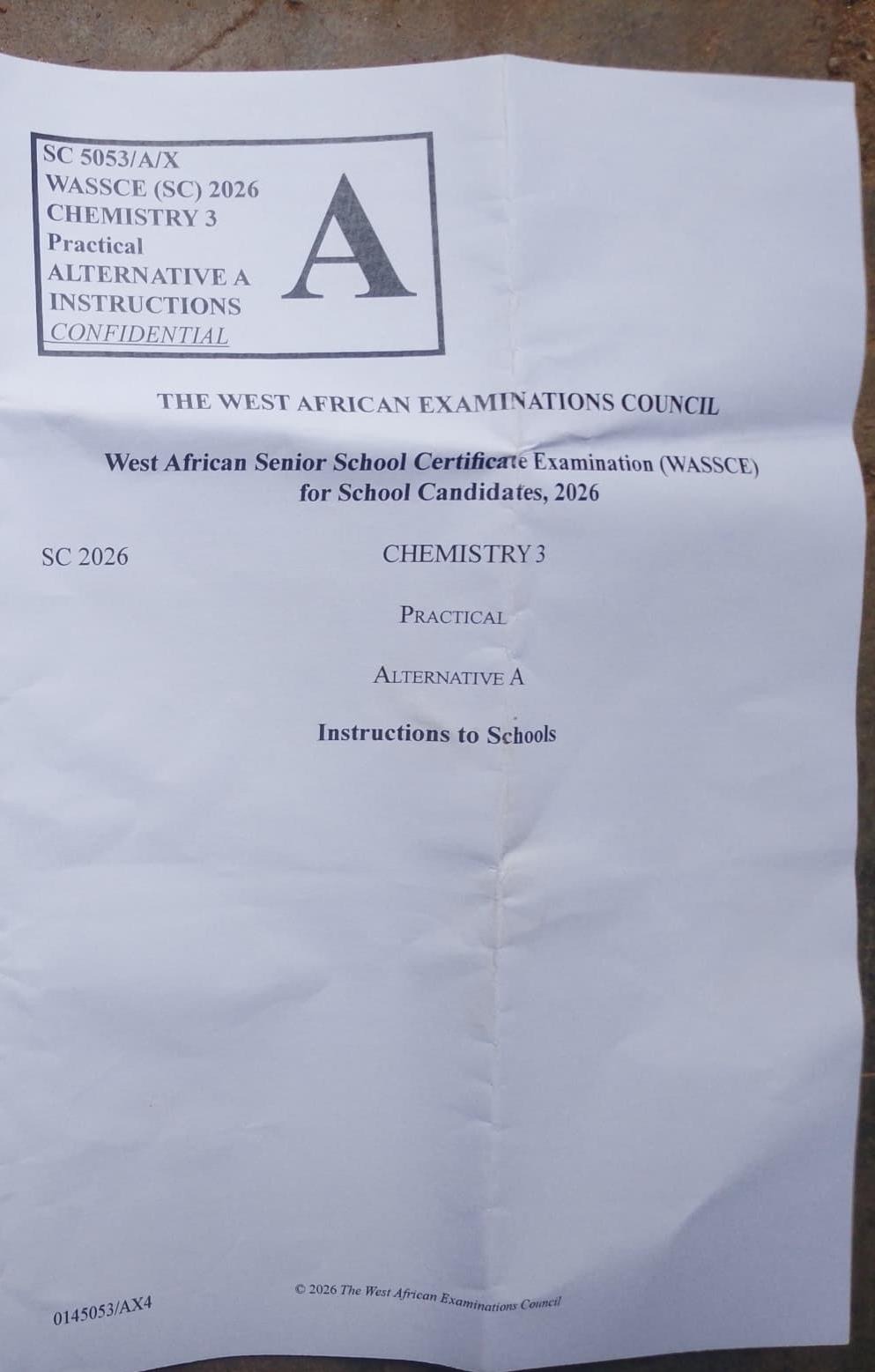
The West African Examinations Council does not distribute physical specimens to schools for Alternative to Practical papers. Instead, they issue a confidential specimen description guidelines sheet to examiners. The actual test papers contain pre-drawn diagrams or high-resolution images of these items. The detailed specific 2026 specimen identification codes are guarded tightly until exam day, but the core thematic subjects remain consistent year after year.
Core 2026 WAEC Subjects with Practicals & Their Quirks
Not all practicals are built the same way. Every subject has a highly peculiar marking pattern or specific “trap” that the examiners set to catch unprepared students. Here are the core subjects featuring practical/alternative assessments:
1. Biology
-
The Peculiarity: The Obsession with Structure and Classification.
-
What makes it unique: Biology practicals heavily penalize poor drawing etiquette. Even in an Alternative paper, you may be asked to identify a pre-drawn insect, calculate its structural magnification from the image dimensions, or label specific evolutionary adaptations.
-
The Blueprint: Expect deep questions on ecological links (food webs based on the specimens), taxonomic classification (Phylum, Class), and structural modifications (e.g., how a bird’s beak or a plant’s leaf adapts it to its environment).
2. Chemistry
-
-
The Peculiarity: Pre-Recorded Titration Tables and Qualitative Deduction.
-
What makes it unique: You won’t fill a single burette here. Instead, WAEC will present you with a raw, pre-recorded titration table filled with values (initial and final burette readings) that might contain deliberate errors or require calculating an average titre volume using only concordant values.
-
The Blueprint: You will be given a text-based “Test, Observation, and Inference” matrix for qualitative analysis (salt analysis). For instance, the prompt might say: “To a solution of substance X, dilute NaOH was added dropwise until in excess. A blue precipitate was formed, insoluble in excess.” You must immediately deduce that Copper ions ($Cu^{2+}$) are present.
-
3. Physics
-
The Peculiarity: Graph Plotting and Error Management.
-
What makes it unique: The physics alternative paper evaluates your understanding of data interpretation. You will be shown diagrams of linear scales, micrometer screw gauges, or stopwatches, and you must accurately read the values yourself to populate a data table.
-
The Blueprint: You will be required to plot a rigorous technical graph based on those readings. Examiners look for specific criteria: choosing an appropriate scale that covers at least 50% of the graph sheet, accurate plotting of points, calculating the slope ($S = \frac{\Delta y}{\Delta x}$), and noting precautions (like avoiding parallax error when taking readings from a scale diagram).
4. Agricultural Science
-
The Peculiarity: Tool Identification and Soil/Crop Management.
-
What makes it unique: This paper transitions rapidly from engineering to geology to zoology. You will be shown line drawings of farm tools (like a budding knife or sickle), livestock parasites (like ticks or tapeworms), or soil samples.
-
The Blueprint: You must state the specific functions of the tools, describe the maintenance routines required to keep them functional, identify the symptoms of livestock infestation by the pictured parasites, and outline soil remediation methods (such as liming or fertilizers).
5. Data Processing / Computer Studies
-
The Peculiarity: Screen Mockups and Step-by-Step Command Syntaxes.
-
What makes it unique: Instead of sitting in front of a live operating system or database manager, you are shown printouts or drawn wireframes of software interfaces—typically Database forms, Excel spreadsheets, or HTML markup boxes.
-
The Blueprint: You will be asked to write out the precise keyboard shortcuts, cell formulas (e.g.,
=SUM(A1:A10)), or database query commands required to achieve a specific task displayed in the image.
Pro-Tips for Acing the 2026 Alternative Papers
-
Study Old Diagram Blueprints: Revisit past questions from 2018 to 2025. WAEC routinely recycles the exact same line illustrations for their alternative papers. Familiarize yourself with how they draw a respirometer, a potometer, or a circuit board.
-
Memorize Chemical Color Indicators: Since you won’t watch a physical solution turn pink or form a precipitate, you must memorize every single color change for food tests, acid-base indicators, and gas confirmation tests.
-
Perfect Your Graphical Slopes: Bring a long, transparent ruler and a sharp pencil to the hall. A thick line on a physics or chemistry graph can cost you accuracy marks for your intercept values.